

Cristiano Ronaldo’s Childhood: The Tin-Roof House Story
Before the “Siuuu” celebration filled packed stadiums. Before five Ballon d’Ors landed on his mantel. Before nine-figure contracts and private jets became part of his everyday life, there was just a small, unremarkable hillside neighborhood in Funchal, the capital of Madeira. That’s where Cristiano Ronaldo dos Santos Aveiro was born on February 5, 1985, in a modest, government-subsidized home in the working-class district of Santo António. He was the youngest of four kids in a family that had almost nothing extra to give.
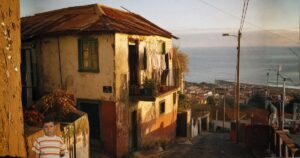
The house itself tells you most of what you need to know about where this story starts. It wasn’t glamorous, and honestly, it wasn’t even comfortable by most standards. Ronaldo has talked openly in interviews and documentaries about growing up in tight quarters, sharing space with his older siblings, Hugo, Elma, and Cátia Liliana, in a home smaller than the closets many pro athletes have today. There was no extra room. No privacy. And often, no extra food.
Money was tight in a way that’s hard to explain to someone who’s never lived through it. His father, José Dinis Aveiro, worked as an equipment manager, basically a “kit man,” for a small local football club. That job barely paid enough to keep a family of six fed and housed. His mother, Dolores, picked up whatever work she could find, cooking, cleaning, doing anything that brought in a little extra cash. According to multiple family accounts, there were stretches when meals got skipped, not out of choice, but because there simply wasn’t enough. Clothes were hand-me-downs. Luxuries just weren’t part of the picture.
For a man who’d go on to become one of the richest athletes in sports history, this beginning isn’t some throwaway detail before the “real” story kicks in. It’s actually the foundation everything else was built on. That hunger Ronaldo talks about, the drive, the refusal to ever feel satisfied, the almost obsessive relationship with training, isn’t just a line he trots out for cameras. It was real. It was physical. And it shaped him at a deep level. When he talked about wanting more as a kid, he wasn’t speaking in metaphors. “More” often meant simply having enough to eat that day.
So what makes someone come out of poverty driven instead of defeated? Psychologists who study high achievers have noticed a pattern among kids raised in real scarcity. Some get crushed by it. They start believing that resources are limited and big dreams belong to other people. Others take that same hardship and turn it into fuel, a kind of relentless motivation that never really shuts off, even long after the original problem (hunger, poverty, instability) is gone. By every account from teammates, coaches, and biographers, Ronaldo chose that second path. It might be the single most important piece of the puzzle when you’re trying to understand the player, and the man, he became.
Look at the evidence. Here’s a guy who, at nearly 40, still trains like a teenager fighting to make the first team. This is someone who has admitted he can’t fully relax on vacation without squeezing in some kind of workout, who reportedly begged his youth coaches for extra sessions after official practice ended, and who has built his entire public image around discipline and constant self-improvement. None of that happens by accident. It happens because somewhere in Santo António, a boy under a tin roof figured out early that nobody was going to hand him anything. If he wanted a different life, he’d have to outwork everyone else in the room, every single day, without exception.
That’s also why the classic “rags to riches” label, cliché as it sounds, actually fits here without exaggeration. Unlike a lot of today’s stars who came up through well-funded academies or comfortable middle-class homes, Ronaldo’s childhood was shaped by real, genuine want. That difference matters if you’re trying to understand not just how good he is on the field, but why he is the way he is off it, too. The visible hunger during matches, the emotional intensity, even his occasionally tense relationship with critics and the media. Someone who’s actually known scarcity tends to carry success differently than someone who hasn’t.